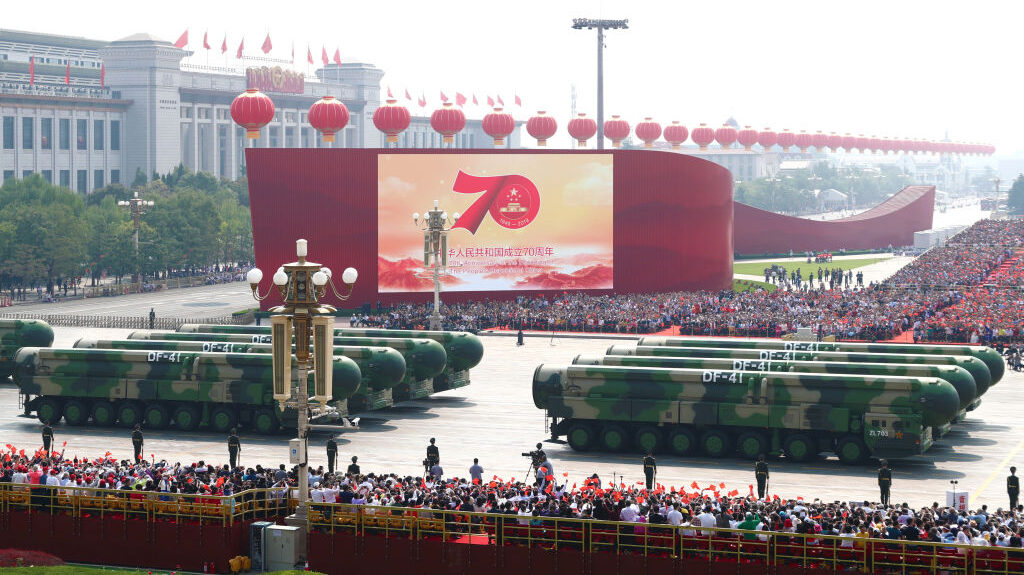
China’s nuclear arsenal surges 20% in one year, reaching over 600 warheads: SIPRI
The Chinese arsenal is still much smaller than that of Russia and the US, but Moscow is watching Beijing's buildup warily, one analyst told Breaking Defense.
The Chinese arsenal is still much smaller than that of Russia and the US, but Moscow is watching Beijing's buildup warily, one analyst told Breaking Defense.

The estimated total rose by 25 percent over the last two years, according to a new report from the Congressional Budget Office (CBO).

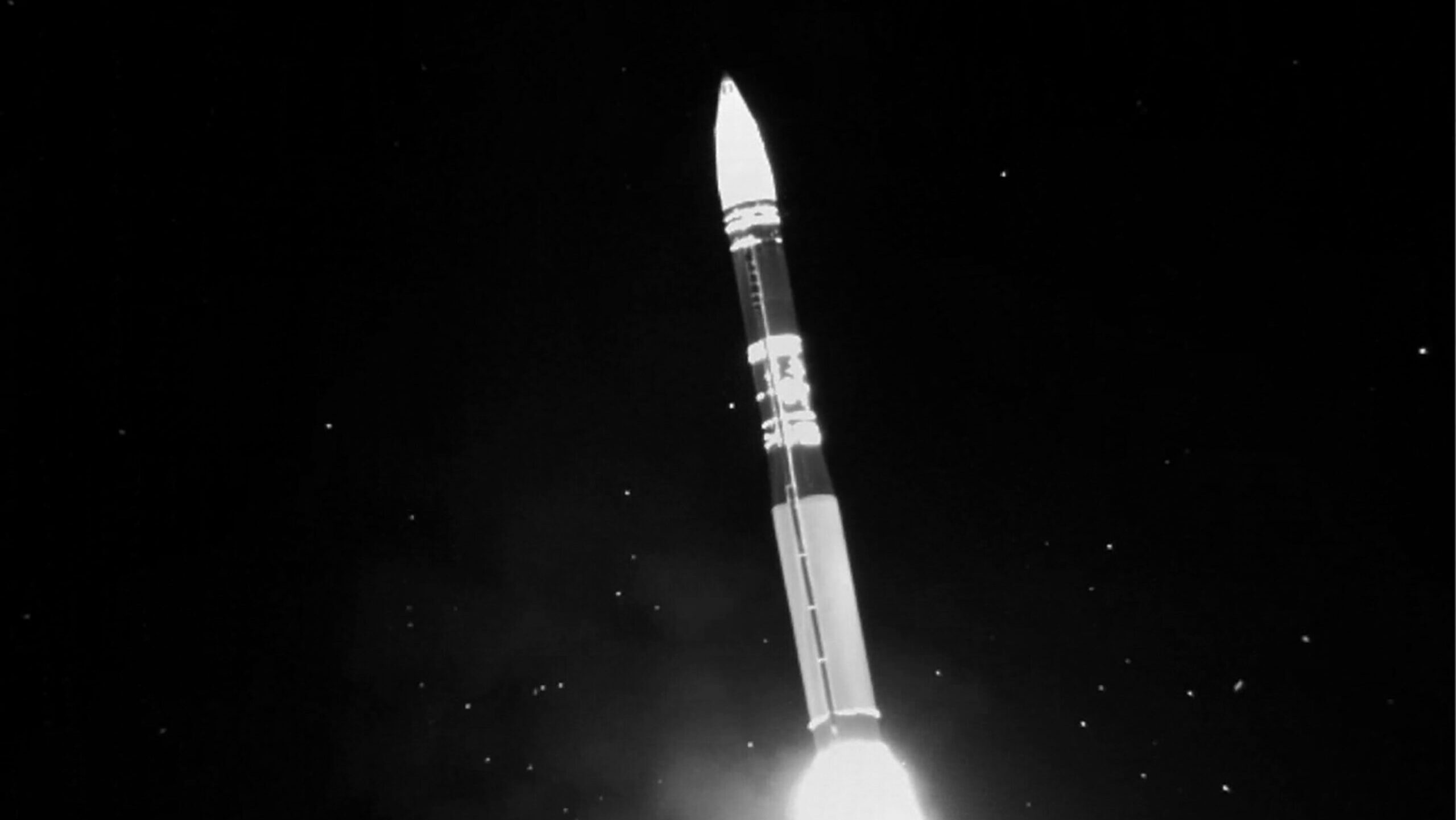
The US should use an international desire for nuclear weapons as geopolitical bargaining chips, write two nuclear experts.

“Poland’s history makes it very clear why they are concerned that the people they align with, and the people they rely on for protection from Russia, will abandon them,” Jon Wolfsthal, a former US government official now with the Federation of American Scientists, told Breaking Defense.

"We are essentially funding nuclear weapons development in North Korea with our bad software practices," said Kathleen Fisher, director of DARPA’s Information Innovation Office.

The inclusion of space-based interceptors is a particularly hard nut for Moscow to swallow, given long-standing Russian belief that such weapons are aimed at undercutting the country’s nuclear retaliatory capability following a US first strike.


Blending superior optics, advanced stabilization and AI-powered autonomy in a compact and rugged system, ASELFLIR 600 delivers unmatched intelligence, surveillance and reconnaissance (ISR) capabilities.
Self-driving cars still get into accidents on highways, an environment for which there is abundant data to train algorithms, expert Paul Scharre said. “What is the training data set we have for nuclear war?”

Technically, the B61-12 is not a “new” nuclear weapon that increases the stockpile, as the US is taking the warheads from the older bombs and placing them in new housings.
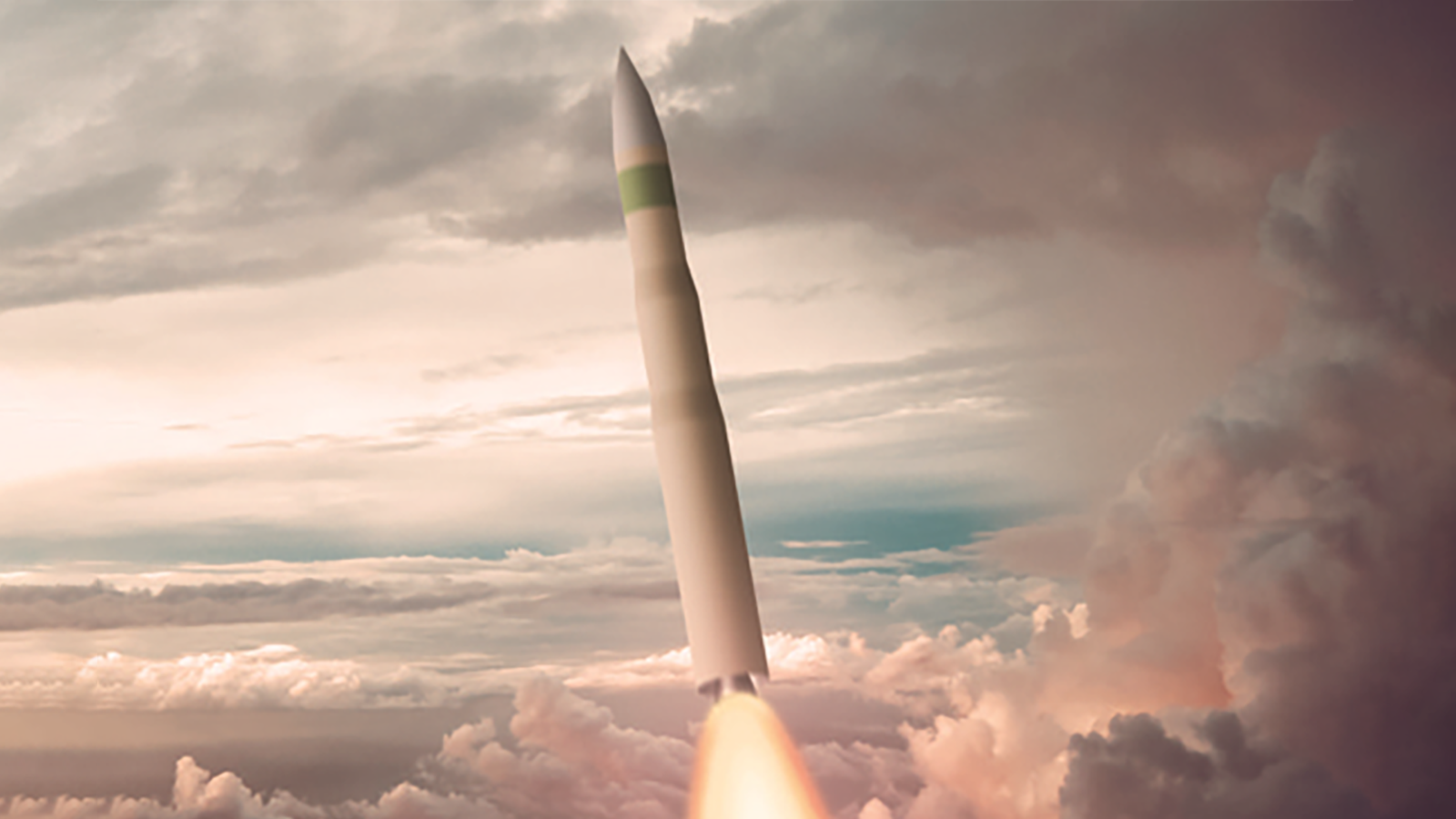
The Air Force notched key successes in 2024, but also saw setbacks for some of the service's biggest priorities.

In our latest eBook collection you’ll read about the need for an integrated cloud system and how the Air Force is trying to secure its own network, questions about AI in nuclear weapon systems, as well as interviews with key industry players.


Consolidate network monitoring, performance management, and fault isolation into a single, comprehensive solution.

SLCM-N was a priority of the first Trump Administration that Biden tried and failed to cancel. Now Vice Adm. Johnny Wolfe has to figure out how to actually build it — without compromising ballistic missile modernization or new hypersonics.

The US bomber fleet has been off alert since 1991, but the nuclear threats of China, Russia and North Korea means it's time to go back to the Cold War posture, argue two nuclear power advocates.
Vipin Narang, DoD's top nuclear policy official, explained that while current modernization plans — estimated by the Government Accountability Office last October to cost at least $350 billion over the next two decades — are "necessary," they "may well be insufficient" to meet current and future threats.

The conservative Heritage Foundation presented the new report as a potential draft Nuclear Posture Review for the 2025 presidential administration.